Watercolor Striped Stains Backgrounds: A Designer's Secret Weapon
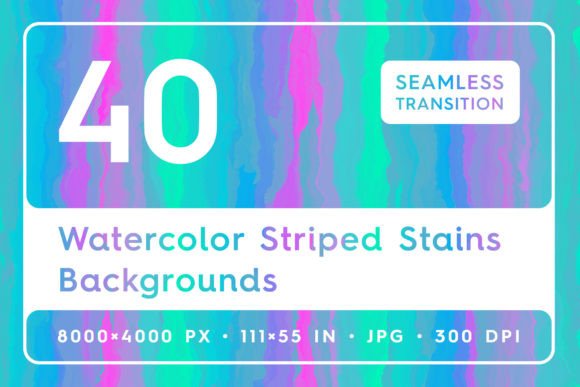
There's a particular kind of visual magic that happens when organic, hand-painted texture meets clean, structured lines. It’s a tension that feels both sophisticated and approachable. This is the exact space occupied by our collection of 40 handpicked Watercolor Striped Stains Backgrounds. These aren't just random splashes of color; they are carefully curated design assets that blend the timeless, fluid beauty of watercolor with the modern, graphic punch of stripes and stains. The result is a set of backgrounds that feel alive, full of depth and character, ready to elevate your next project from ordinary to memorable.
The Visual Personality: Where Organic Meets Graphic
At first glance, the appeal is immediate. You see the soft, bleeding edges of a watercolor wash, with all its beautiful, unpredictable variations in tone and saturation. Layered over this are stripes—some bold and confident, others delicate and sketch-like. These aren't perfectly uniform digital lines. They have the slight imperfections and texture of a hand-drawn mark, which is what gives them their soul. The "stains" refer to the way the color pools and bleeds, creating areas of intense pigment that fade into softer washes. This combination creates a unique personality: it’s artistic but not messy, structured but not rigid, vibrant but not overwhelming.
This style is incredibly versatile. It can feel bohemian and whimsical for a lifestyle brand, bold and modern for a tech startup’s marketing, or elegant and luxurious for a high-end product. The texture adds a tactile quality that flat, digital backgrounds simply can't replicate. It suggests a human touch, craftsmanship, and authenticity—qualities that resonate deeply in today's digital landscape.
Practical Applications: Where These Backgrounds Truly Shine
The real value of any design asset is in its application. A beautiful background that can’t be used effectively is just a pretty picture. These Watercolor Striped Stains Backgrounds are built for real-world use across a vast spectrum of projects. Here’s where I see them working hardest:
- Brand Identity & Logo Design: Use a subtle, textured version as a backdrop for a logo lockup to instantly communicate creativity and approachability. It’s perfect for brands in the wellness, creative, coaching, or artisanal food spaces. The texture helps the brand feel established and trustworthy from the first glance.
- Website & Blog Design: A homepage hero image, a blog post header, or a subtle background for a "About Me" page can be transformed. It adds visual interest without competing with your content. For a web design project, these backgrounds are a simple way to build a strong visual hierarchy and guide the user's eye.
- Social Media Graphics & Marketing: In a crowded feed, you have seconds to capture attention. These backgrounds make your Instagram quotes, Facebook ads, and Pinterest pins pop. They provide a consistent, branded feel across all your social media graphics, making your content instantly recognizable.
- Editorial & Packaging Design: For magazines, book covers, or product packaging, texture is king. These backgrounds can serve as a full cover treatment or as accent panels on packaging. They convey a sense of premium quality and thoughtful editorial design, perfect for products targeting a discerning audience.
- Print & Digital Projects: The high-resolution (300 DPI, 8000×4000 px) makes these files ideal for large-format printing—think posters, banners, and event signage. The seamless transition quality also means they can be tiled or extended for digital wallpapers or presentation slides without obvious repetition.
Integrating Texture into Your Design Workflow
Knowing where to use them is one thing; using them effectively is another. The key is to treat these backgrounds as a foundational layer, not the entire story. Think of them as the canvas upon which your other design assets—your typography, imagery, and copy—will live.
A critical consideration is readability. The very texture that makes these backgrounds compelling can also make overlaid text tricky. Here’s a practical approach:
- Choose Your Font Pairing Wisely: Avoid overly ornate script fonts or handwritten fonts for body copy over a busy background. Instead, opt for a clean, high-contrast sans-serif font or a sturdy serif font for headlines. A strong, modern typeface will cut through the texture while complementing its artistic vibe. The background is the personality; the typography needs to be the clear voice.
- Create Contrast: Use a semi-transparent shape (a rectangle, circle, or custom shape) behind your text to create a clear reading zone. Alternatively, choose a background from the collection with a softer, more muted palette to give your text room to breathe.
- Test at Scale: What looks great on your 27-inch monitor might get muddy when viewed on a phone screen. Always test your designs at the smallest intended size. If the stripes and stains start to create visual noise that interferes with your message, simplify. You might use just a corner of the background or apply a color overlay to unify the palette.
When selecting a background from the set, consider your project's emotional tone. The collection includes a range of color harmonies and stripe intensities. A project aiming for calm and trust might use a soft blue-gray watercolor with faint pencil stripes. A campaign for a summer sale might use a vibrant coral and yellow with bold, energetic stripes. Evaluate the project fit by asking: Does this texture support the story I’m trying to tell?
Finally, understand the asset's specifications. The JPG extension is universal for web and print use. The massive dimension of 8000×4000 pixels gives you incredible flexibility to crop, scale, and reuse the same background across multiple formats without losing quality. This isn't a one-trick pony; it's a foundational library for your brand identity system.
In the end, great design is about communication. These Watercolor Striped Stains Backgrounds provide a powerful, versatile visual language that communicates creativity, authenticity, and modern sophistication. They are a practical, high-quality tool for designers, marketers, and creators who want to make a lasting impression without starting from a blank, sterile page. They offer a shortcut to depth and character, allowing you to focus on what you do best: crafting the message and connecting with your audience.